
WeChat Pay for Foreigners: The Real 2026 Guide to Using It Without a Chinese Bank Account
I still remember the first time I watched a friend try to pay for a bowl of noodles in Chengdu with cash. The vendor stared at the bills like they'd never seen paper money before, then pointed at a little QR code taped to the side of her cart. That was five years ago. Today, mobile payment is the default in much of China — but carrying some RMB is still a smart backup.
If you're heading to China and wondering whether you can get WeChat Pay working without a Chinese bank account, here's the short version: yes, you can. I've set this up myself, and I've walked a handful of visiting friends and colleagues through the same process. It's not perfect, and it's not always as smooth as WeChat's own marketing suggests, but it works — and once it's working, it changes how you experience the country.
This guide is part of our broader Payments in China guide for foreigners.
Can Foreigners Actually Use WeChat Pay in China?
Yes. This used to be one of the most frustrating parts of visiting China as a tourist. A few years back, WeChat Pay was basically locked to people with a Chinese bank account, which meant most short-term visitors were stuck fumbling with cash while everyone around them tapped their phones and walked off.
That's changed. WeChat now lets eligible international visitors link supported foreign cards directly to their wallet. No Chinese bank account required. No Chinese ID card. In most cases, you don't even need a Chinese SIM card — an overseas phone number can be used for registration, provided you can receive the verification messages and have a working data connection.
Payment rules and account controls can change, so treat the limits and fee details below as a practical guide and check what your WeChat Pay account shows before a large purchase.
Who Is This Actually For?
Pretty much anyone visiting or living in China short-term:
- Tourists on a two-week trip who don't want to rely on cash everywhere
- Business travelers bouncing between meetings in Shanghai and Shenzhen
- Exchange students who haven't opened a local bank account yet
- Digital nomads working out of Chengdu or Dali for a month or two
- Long-term expats still in the process of getting their Chinese banking sorted
If you fall into any of these groups, setting this up before your flight — not after you land — will save you a genuinely annoying first 24 hours in the country.
What You Actually Need (And What You Don't)
In practice, you need four things:
- A passport
- A working phone number (an overseas number can be used)
- A supported foreign credit or debit card
- The WeChat app itself
You do not need a Chinese bank account or a Chinese ID card just to use WeChat Pay as an international visitor.
A reliable internet connection matters too. If you're still sorting out roaming, eSIMs or VPN access, read our Internet, VPN & SIM guide for China before you leave.
Setting Up WeChat Pay Before You Land
I'd strongly recommend doing this at home, on decent Wi-Fi, a few days before your trip — not at the airport with jet lag setting in and spotty terminal Wi-Fi.
1. Download and register
Get WeChat from the App Store or Google Play and register with your phone number.
2. Find the Wallet section
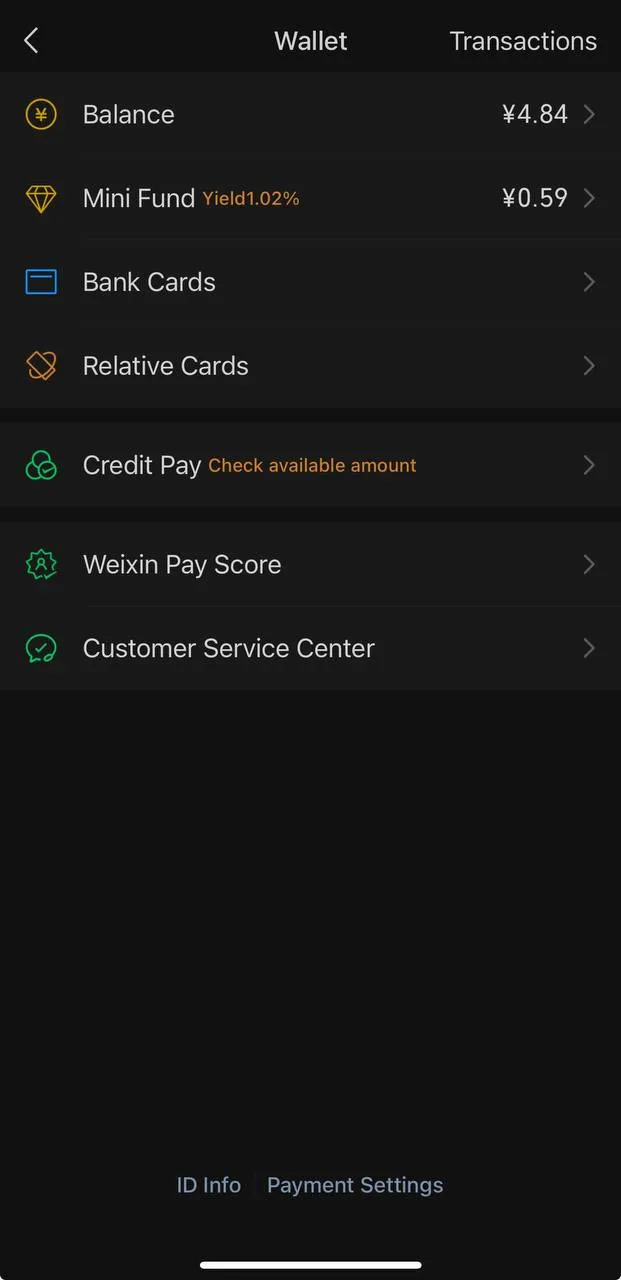
Tap Me → Services → Wallet. Menu labels can shift slightly depending on your region and app version, so update the app if the Wallet or payment options don't appear where expected.
3. Add your international card
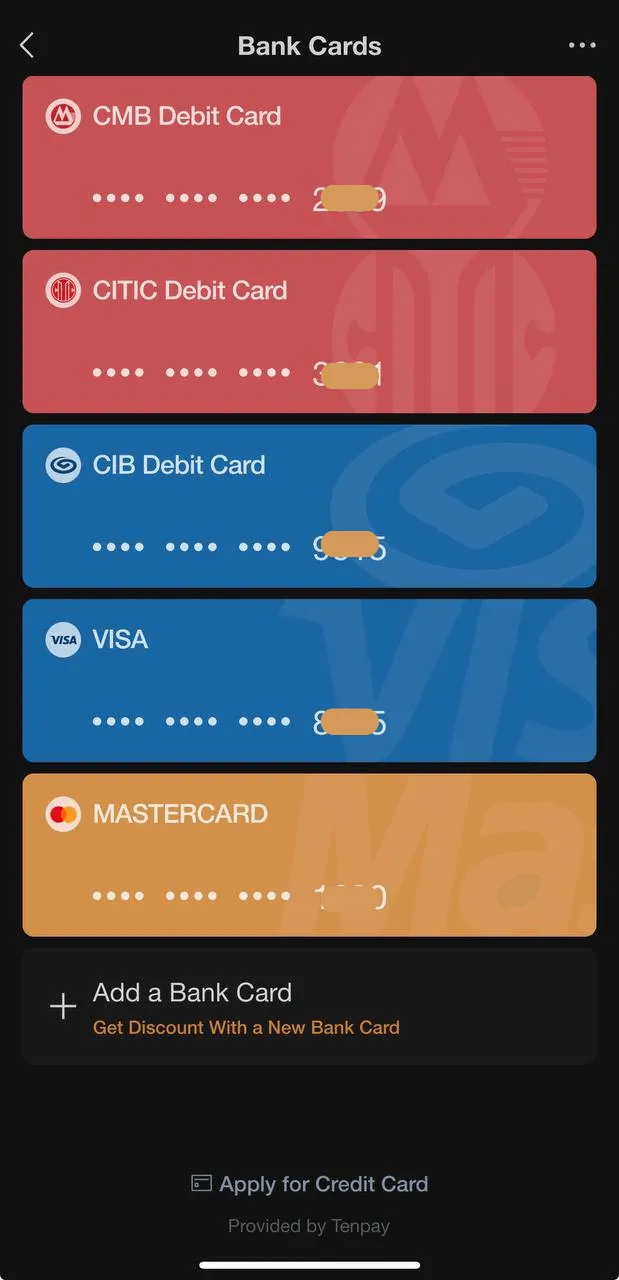
Inside Wallet, open Cards or Add Bank Card and enter the requested card information exactly as it appears on the card.
4. Verify your identity
WeChat may ask for passport details and additional identity verification. Make sure the information you enter matches your passport precisely — names, spelling and document details included.
5. Start paying
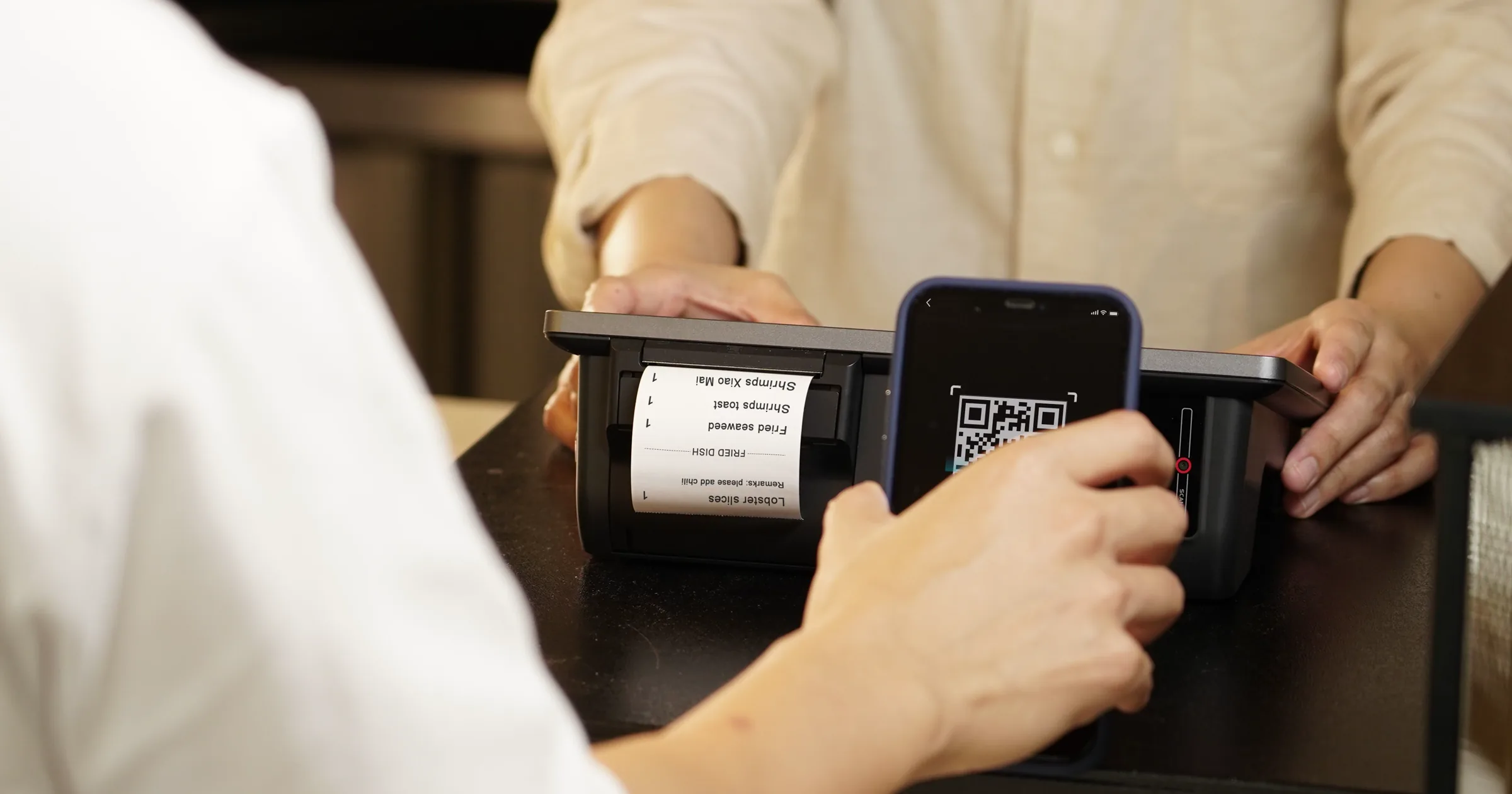
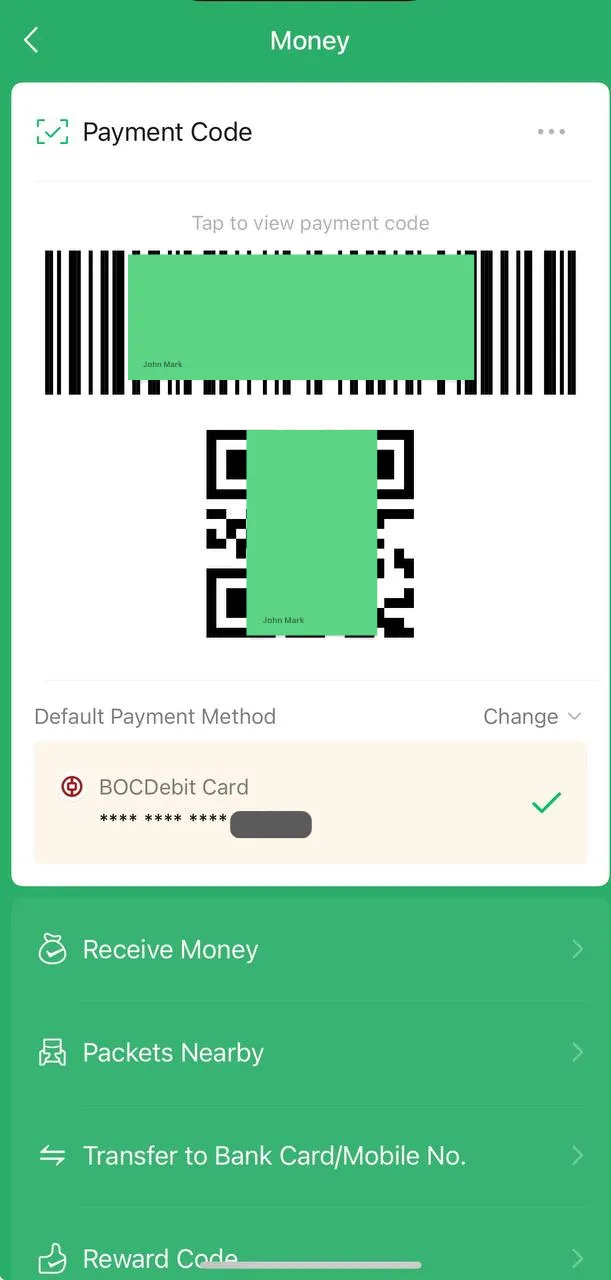
Once setup is complete, you can usually either scan a merchant's QR code or show your own payment code for the cashier to scan.
Where People Actually Get Stuck
From helping a few friends through this, the sticking points are usually the same:
- Name mismatches. Enter your identity and cardholder information exactly as requested.
- Outdated apps or missing menus. Update WeChat if the payment options don't appear where expected.
- Card issuer authorization. Your bank may block a card-linking attempt or payment because of fraud controls or overseas transaction settings.
Does WeChat Pay Accept Visa and Mastercard?
Yes. WeChat Pay supports major international card networks for eligible overseas users, including Visa, Mastercard, American Express, JCB, Discover, Diners Club and UnionPay.
That doesn't mean every individual card will link successfully. Your issuing bank can still decline authorization, so I recommend bringing a second card from a different network or issuer.
If a card gets declined, don't immediately assume WeChat Pay itself is broken. Check whether international transactions are enabled, contact the issuer if necessary, and try another supported card.
What Does It Actually Cost to Use WeChat Pay as a Foreigner?
Linking an international card itself does not normally cost anything.
Under the standard international-card fee structure, transactions of RMB 200 or less are generally exempt from the 3% service fee, while transactions above RMB 200 can incur a 3% service fee.
There is also a current incentive for newly linked international cards: eligible users can receive a 60-day fee waiver, with the 3% international-card service fee waived on up to RMB 1,000 of eligible spending per day during the promotional period. Eligibility and campaign terms can change, so check the current terms shown in WeChat Pay rather than planning your trip around the promotion.
Your own bank may separately charge a foreign transaction fee or use its own currency conversion rate. That's outside WeChat Pay's control, so check your card's overseas fee policy before traveling.
Are There Spending Limits?
Yes.
Chinese government guidance has previously listed mobile-payment limits for international cards of up to US$5,000 per transaction and US$50,000 per year. More recent official guidance also emphasizes that actual limits and charging standards can vary by payment product, account status and service terms.
So don't treat those figures as a guaranteed personal allowance. If you're planning a large purchase or hotel payment, check the limits displayed in your WeChat Pay account first. Your card issuer may impose its own limits as well.
Common WeChat Pay Problems (And How I've Actually Fixed Them)
"My card isn't being accepted."
Start with your card issuer. Overseas card linking and payments can be declined because of fraud controls, authorization rules or international-transaction settings. If the bank confirms everything is enabled, try another supported card or payment method.
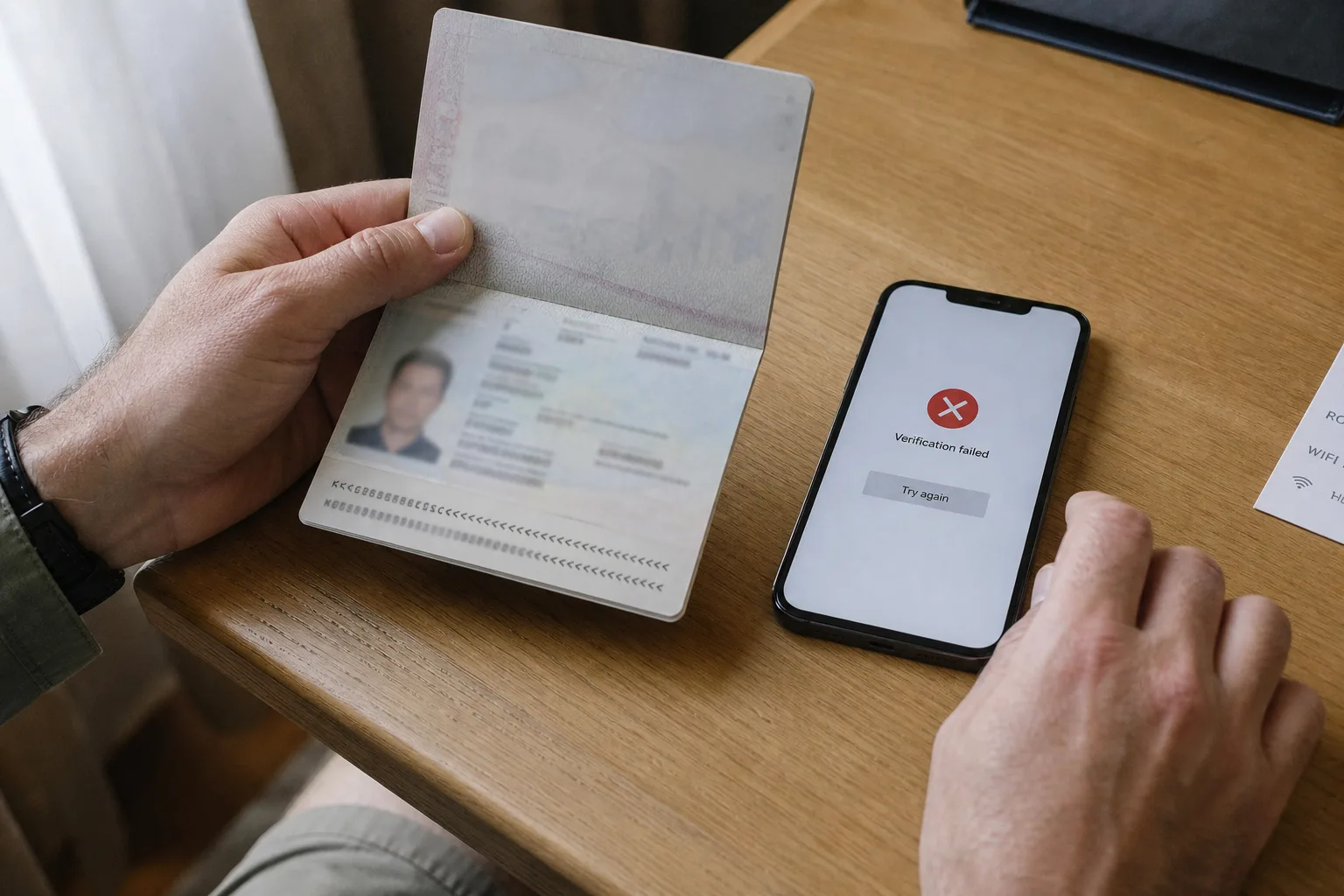
"Passport verification keeps failing."
Double-check that every detail matches your passport exactly. If the app asks you to resubmit an image, use a clear photo with good lighting and no glare.
If verification keeps failing, see our dedicated Alipay & WeChat Pay verification troubleshooting guide.
"A payment just failed for no obvious reason."
Don't assume there's only one cause. It could be the card issuer, WeChat's risk controls, the merchant's payment setup or a temporary connectivity problem. Try switching between Wi-Fi and mobile data, then use a backup payment method if it still fails.
For a deeper troubleshooting flow, see Why Payments Fail in China.
"I can't find the Wallet option."
Update the app first. Regional interfaces and app versions can differ, so the exact menu path may not look identical on every phone.
"I can't receive money from someone."
Some person-to-person transfer and wallet-balance features can be more restricted for overseas accounts than ordinary merchant payments. Check what your account currently enables rather than assuming international-card access unlocks every feature available to local users.
"The QR code won't load."
Check your connection and restart the app. If the merchant's code still won't work with your linked card, switch to Alipay, another card or cash rather than repeatedly retrying the same payment.
WeChat Pay vs Alipay: Which Should You Actually Use?
Every traveler asks this eventually, and the answer is simpler than most forum debates make it sound.
Both are accepted very widely in China, and both support international cards for eligible visitors. The differences matter more in the surrounding ecosystem and in how reliably a particular card/account combination works for you.
WeChat Pay makes more sense if you're already using WeChat to talk to friends, colleagues, drivers or a tour guide in China. Messaging, mini-programs and payments all live in the same app.
Alipay is also extremely useful for travel, with many transport and visitor-facing services integrated into its ecosystem.
My practical recommendation is simple: install both. Having a second mobile-payment app matters far more than trying to declare one universal winner. If one payment fails, you have another option ready.
For setup details, see our Alipay for Foreigners guide.
Practical Tips Before You Land
Before your trip:
- Link a supported card before departure
- Bring a second card if possible
- Finish identity verification while you have reliable internet
- Check your bank's international transaction settings
- Install both WeChat and Alipay
Once you're in China:
- Keep mobile data available — payment apps need connectivity
- Carry a physical bank card as backup
- Carry a small amount of RMB cash for emergencies
- Keep an eye on transaction notifications, especially during the first few days
Quick Answers to Common Questions
Can tourists use WeChat Pay?
Yes. Eligible international visitors can register, complete the required identity verification and link supported international cards.
Can foreigners use WeChat Pay without a Chinese bank account?
Yes. A Chinese bank account is not required for eligible visitors using supported international cards.
Do I need a Chinese phone number?
Not necessarily. Overseas phone numbers can be used for registration, although you need to be able to receive verification messages.
Does WeChat Pay accept Visa?
Yes, for eligible international users and supported cards.
Does WeChat Pay accept Mastercard?
Yes, for eligible international users and supported cards.
Can foreigners receive money through WeChat Pay?
Some person-to-person transfer and wallet functions may be restricted depending on your account and verification status. Merchant payments are the more straightforward use case for visitors.
Can I use WeChat Pay for Didi?
WeChat Pay can be used in many Didi payment flows, but app/account/payment availability can vary. Keep another payment method ready.
Can I pay with WeChat Pay at Chinese airports?
WeChat Pay is widely accepted by airport merchants in China, but individual merchant acceptance can vary.
Is WeChat Pay safe for foreigners?
WeChat Pay uses identity verification and card authorization controls for international users. As with any payment app, protect your account, phone and verification codes.
Do I still need cash in China?
Mobile payment will cover most day-to-day situations, but carrying a small amount of RMB is still a smart backup — especially if your phone dies, your card is declined, or you're somewhere with poor connectivity.
The Bottom Line
WeChat Pay has become one of the easiest ways for foreign visitors to handle everyday payments in China without opening a Chinese bank account. If your card and verification go through smoothly, setup doesn't take long.
Do it before you fly, install Alipay as a backup, bring a second card if you can, and carry a little RMB for emergencies. Then a temporary payment failure becomes a minor inconvenience rather than something that derails your day.
Related Guides
- Payments in China for Foreigners
- How to Pay in China as a Foreigner
- Alipay for Foreigners
- Why Payments Fail in China
- Alipay & WeChat Pay Verification Failed
- Internet, VPN and SIM in China
Last updated: September 2026. WeChat Pay's international-card support, limits, fees and promotional terms can change. Check the current terms shown in WeChat Pay before your trip.