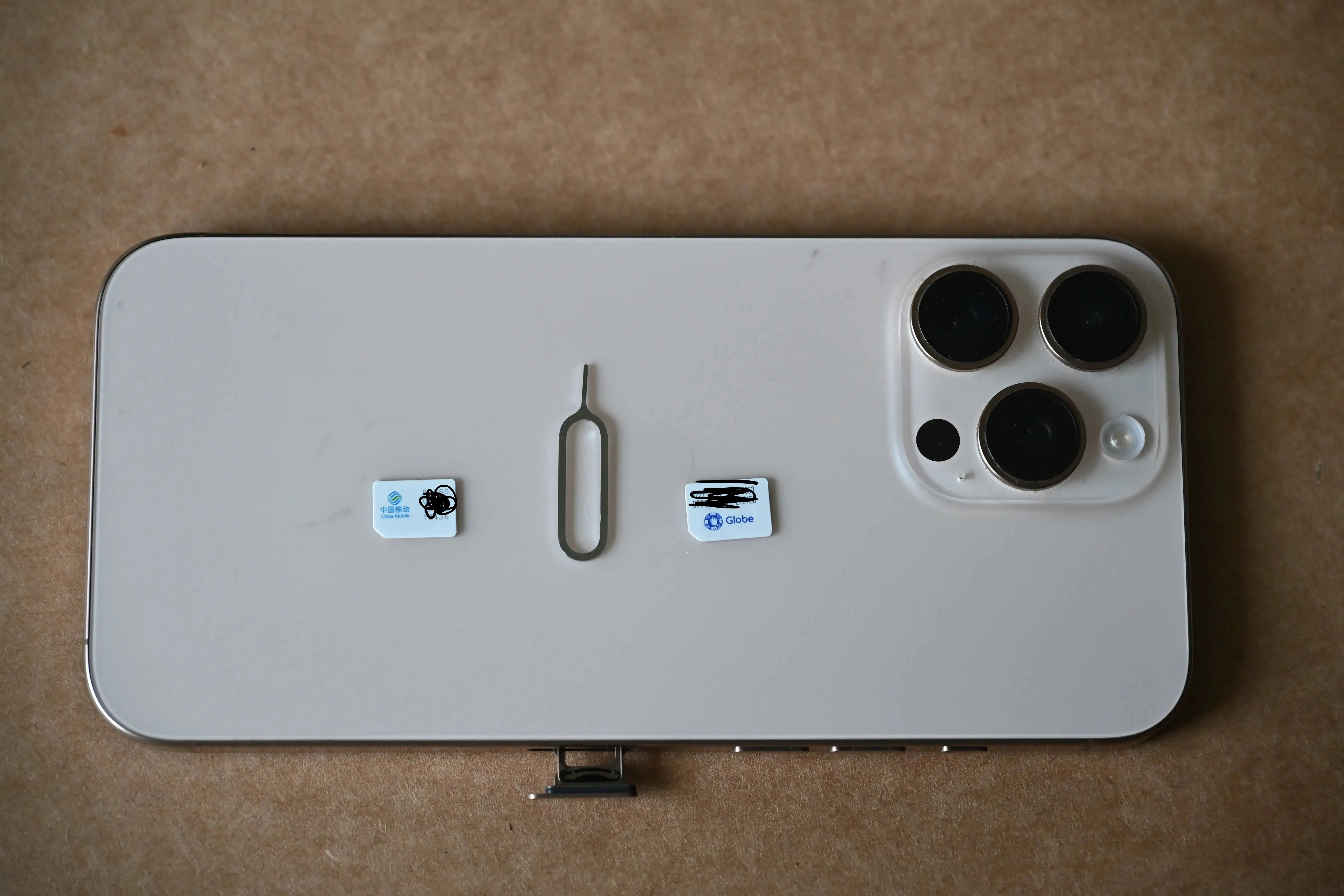

Curious how China’s internet setup actually differs from what you’re used to back home? I break it down here, based on constantly switching between a Philippines SIM and a China SIM myself.
You land in China, turn off airplane mode, and open WhatsApp to tell your family you arrived safely. Then you try Google Maps. Then Gmail. Then Instagram. And suddenly — nothing works.
This is why many travelers now look for a China travel eSIM before departure. A good eSIM can give you working mobile data from the moment you land, and in many cases it lets you access international apps without a separate VPN. But there is one important catch you need to understand before you buy anything.
There is no single "best" China eSIM for every trip — the right pick changes with price sensitivity, how much data you need, and whether you already use a provider's app. This guide compares exact Trip.com and Airalo plans and prices instead of naming one universal winner, and we update it as prices, discounts, and package terms change.
Best eSIM for China — Quick Answer
For most short-term travelers, a travel eSIM is the easiest way to stay online in China. Many China travel eSIMs can access Google, WhatsApp, Gmail, Instagram and other international apps on mobile data, often without a separate VPN, because the connection may be routed outside mainland China.
However, most travel eSIMs are data-only and do not provide a Chinese phone number. That means they may not solve SMS verification, public Wi-Fi login, Didi, food delivery, bike sharing, or some local app registration problems.
- Cheapest here: Trip.com's 3 GB/day, 7-day plan at $8.81 — the lowest price of the six SKUs compared below.
- Best value for heavier data: Trip.com's 100 GB/day, 7-day plan at $13.13, speed-capped at 10 Mbps.
- If you already prefer Airalo's app: choose the matching Airalo SKU, but compare its total allowance and price first — it costs more for the same days and data in every scenario below.
- If you need a Chinese phone number: read the China SIM Card for Foreigners guide before deciding.
Disclosure: This guide may contain affiliate links. If you buy through these links, I may earn a small commission at no extra cost to you. I only recommend tools that are relevant to China travel planning.
Before you fly: Set up your eSIM at home, and download your VPN app before departure — both are much harder to sort out once you are inside China.
What Is a China Travel eSIM?
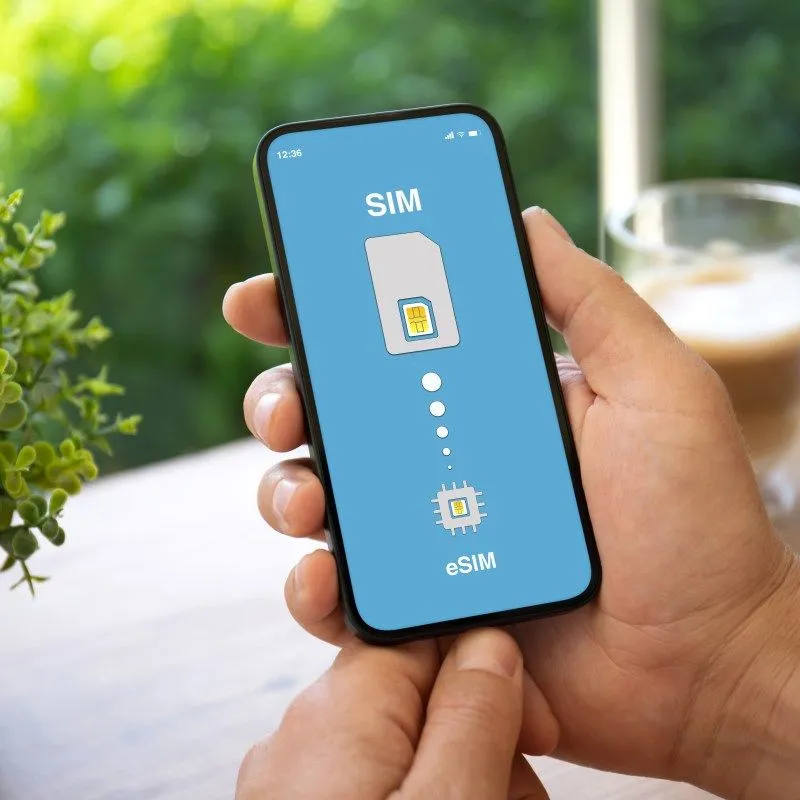
An eSIM is a digital SIM built into your phone. You buy a plan online before you leave, install it via QR code, and activate it when you land — no airport queue, no physical card, your home number stays active on the same device.
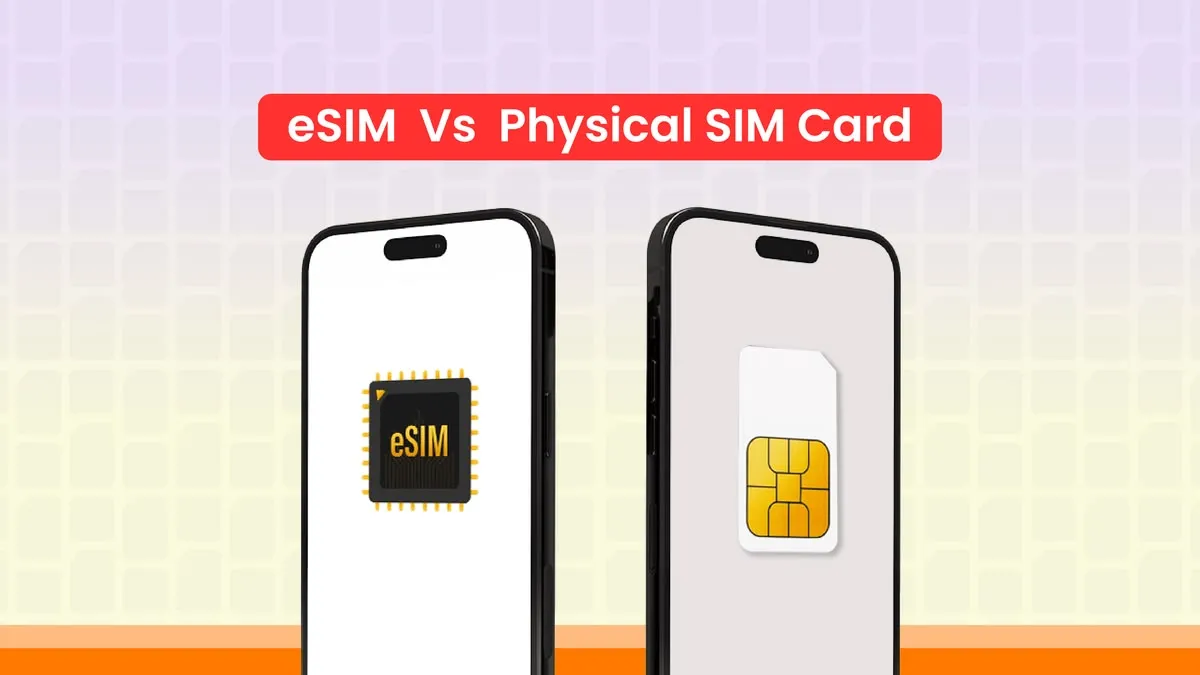
Most China travel eSIMs are data-only. They give you a mobile internet connection. They do not give you a Chinese phone number, and they are not a VPN.
A China travel eSIM is a mobile data solution, not a Chinese phone number solution. Keep that distinction in mind and the rest of this guide will make sense.
Does a China eSIM Work Without a VPN?
If you are looking for the best China eSIM with a VPN in mind, the short version is: the eSIM and the VPN solve different connections, and the best setup usually uses both for different situations rather than picking one over the other.
The honest answer: it depends, but many do.
Most international travel eSIMs route mobile data through gateways outside mainland China, which often bypasses the Great Firewall. On that mobile data connection, you may be able to use Google, WhatsApp, Gmail and Instagram without a separate VPN running. But “many do” is not “all do, always, everywhere” — it depends on the provider, their carrier partnerships, your city and your device.
The more important thing: even if your eSIM works perfectly on mobile data, hotel Wi-Fi and public Wi-Fi behave differently. Those connections route through Chinese mainland networks. Google will not load on hotel Wi-Fi just because it loads on your eSIM data. For Wi-Fi, a VPN is still useful.
you can see the guide to check if you need a vpn: Do You Need a VPN in China in 2026
Can You Use Google, WhatsApp and Instagram with a China eSIM?
| App | On travel eSIM mobile data | Notes |
|---|---|---|
| Usually yes | Most commonly reported as working | |
| Google Search / Gmail | Often yes | Depends on provider routing |
| Instagram / Facebook | Often yes | Data-heavy |
| YouTube | Sometimes | Drains your plan quickly |
| Google Maps | Often opens | Not reliable for local navigation in China |
| Zoom / FaceTime | Variable | Quality depends on signal |
One important note on Google Maps: being able to open it is not the same as having accurate navigation. Google Maps has limited coverage for mainland China streets. Use Amap (高德地图) or Baidu Maps for local navigation. Read why Google Maps is unreliable in China.
The Biggest Limitation: No Chinese Phone Number
This is the most common misunderstanding: a travel eSIM can give you internet, but it usually cannot receive Chinese SMS codes.
Because most travel eSIMs are data-only, a Chinese phone number is not included. In China, a phone number is required for many things that have nothing to do with the internet:
- Public Wi-Fi login — most hotel, cafe and transit Wi-Fi requires SMS verification to a Chinese number
- Didi / ride-hailing — some travelers manage through Alipay or a foreign number, but SMS confirmation can still become a blocker
- Food delivery — Meituan and Ele.me work much better with a Chinese number; a data-only eSIM does not remove the phone number requirement
- Bike sharing (Hello Bike, Meituan Bike) — phone number required
- WeChat registration — foreign numbers sometimes work, but new accounts may trigger extra verification or need an existing WeChat user to confirm you
- Alipay and WeChat Pay verification — eSIM only gives you internet; it does not fix passport verification, bank card checks, account risk controls or payment limits
If your problem is internet access, eSIM helps. If your problem is Chinese phone number verification, eSIM may not help.
eSIM vs VPN vs Local SIM
 Tool Tool | Best for | Does not solve |
|---|---|---|
| Travel eSIM | Mobile data, international apps, easy setup | Chinese phone number, SMS verification |
| VPN | Accessing blocked apps on Wi-Fi or laptop | Phone number, identity verification |
| Local Chinese SIM | Chinese number, SMS verification, local services | Google / WhatsApp without VPN |
| International roaming | Convenience, keeping your home number | Cost on longer trips |
For most short-term travelers, the practical combination is: travel eSIM for mobile data + VPN backup for Wi-Fi use. A local SIM is only necessary if you genuinely need a Chinese phone number.
Best China eSIMs at a Glance
We are not naming one "best overall" provider — the right pick depends on price sensitivity, trip length, and daily data use. Here is how the six compared plans break down honestly:
| Pick | Plan | Price | Why |
|---|---|---|---|
| Cheapest | Trip.com 3 GB/day · 7 days | $8.81 | Lowest price of any plan compared here |
| Best for heavy data | Trip.com 100 GB/day · 7 days | $13.13 | Far more data than Airalo's fixed plans, but capped at 10 Mbps |
| Cheapest 2-week plan | Trip.com 3 GB/day · 15 days | $16.59 | Daily allowance is easier to budget on a longer trip |
| If you already use Airalo's app | Airalo 10 GB · 7 days | $24.50 | Costs more than the matching Trip.com plan, but keeps everything inside one app |
| Airalo unlimited | Airalo Unlimited · 7 days | $27.00 | 3 GB high-speed daily, then 1 Mbps under Airalo's current fair-use terms |
| Best unlimited across more providers | Reserved — Nomad, Holafly, Saily comparison | — | Not yet tested or price-compared here; see the note below before choosing one of these |
See the exact plan picker with live buy links →
Prices were checked on September 3, 2026 and can change — confirm the live price at checkout.
Best cheap China eSIM vs. best value China eSIM
These are two different questions, and it is worth separating them:
- Cheapest means the lowest sticker price. Trip.com's 3 GB/day, 7-day plan at $8.81 is the cheapest plan compared here.
- Best value means the most data or capability per dollar. For travelers who will use more than 3 GB/day, Trip.com's 100 GB/day plan at $13.13 is the better value, even though it is not the cheapest option on the page — the 10 Mbps speed cap is the trade-off.
Airalo does not currently win either comparison against the matching Trip.com plan, but it may still be the simpler choice if you already have the Airalo app installed and prefer managing top-ups there.
Trip.com: the cheaper option in this comparison
For 7 days, Trip.com currently offers 3 GB per day for $8.81, or 100 GB per day with a 10 Mbps speed cap for $13.13. Its 15-day 3 GB-per-day option is $16.59. All three listings are labeled 5G eSIM on China Unicom and ChatGPT Available.
I tested a Trip.com eSIM on mobile data in Yunnan, including mountain areas. Speeds were good for normal travel use, and ChatGPT worked without a separate VPN. That is a field observation, not a promise that every phone, location, or future package will behave identically.
For the plan-by-plan price details, limitations, and exactly what was and was not tested, read the full Trip.com China eSIM review and Yunnan field test.
Airalo: the dedicated eSIM-app option
Airalo’s comparable plans cost more: 10 GB total for 7 days is $24.50, 7-day unlimited is $27, and 20 GB total for 15 days is $39. The unlimited plan includes 3 GB of high-speed data per day, then runs at 1 Mbps under Airalo’s current fair-use terms.
Airalo may still fit if you already use its app and prefer managing eSIM installation and top-ups there. Its China plans use China Unicom, which supports 5G, though Airalo does not label every plan specifically as a 5G SKU the way Trip.com does. Airalo states that its international routing gives access to services such as Google and WhatsApp on mobile data; I have not presented that provider statement as my own field test.
Nomad, Holafly, Saily, and Jetpac also sell China eSIMs, including unlimited-focused plans. They are not included in the six-SKU picker or given a "best" label here yet — that row is reserved, not filled in, because I have no affiliate relationship with them and have not tested them. I do not want to send you through an unverified purchase path or invent a "best unlimited" verdict just to make the comparison look larger. If you already use one of them, check its current China plan and price directly before switching providers. This section will be updated with real prices and, where possible, a field test once that comparison exists.
Before buying any plan, confirm: mainland China coverage, data amount, validity period, hotspot allowed, and whether your phone model is supported.
Best China eSIM by Data Amount
How much data you need matters more than which brand you pick. Rough guide, then the closest matching plan from the six compared above:
| Trip length | Light use | Normal use | Heavy use |
|---|---|---|---|
| 3–5 days | 1–3 GB | 3–5 GB | 5–10 GB |
| 7 days | 3–5 GB | 5–10 GB | 10–20 GB |
| 14 days | 5–10 GB | 10–20 GB | 20 GB+ |
Light use = messaging, maps, translation, Alipay QR scanning. Normal use adds social media, occasional video and ride-hailing. Heavy use means YouTube, video calls, or hotspot for a laptop. If you need hotspot for remote work, buy significantly more than the table suggests.
- Best 3 GB/day China eSIM: Trip.com's daily-reset 3 GB plans (7-day $8.81, 15-day $16.59) — enough for maps, translation, messaging and light social media each day.
- Best ~10 GB total China eSIM: Airalo's 10 GB / 7 days ($24.50) if you want one fixed allowance instead of a daily reset.
- Best high-data China eSIM: Trip.com's 100 GB/day, 7-day plan ($13.13, capped at 10 Mbps) — far more headroom than a 10–20 GB fixed plan.
- Best unlimited China eSIM (of the two providers compared here): Airalo's 7-day unlimited ($27) — 3 GB high-speed daily, then 1 Mbps.
- Best ~20 GB total China eSIM: Airalo's 20 GB / 15 days ($39) for a two-week trip on one fixed allowance.
Does a China eSIM Support 5G?
Trip.com labels its China SKUs as 5G eSIMs running on China Unicom. Airalo's China plans also run on China Unicom, which supports 5G, but Airalo does not put a 5G label on every individual plan the way Trip.com does.
Either way, a "5G" label on the plan is not a guarantee of 5G speed everywhere you go. Actual speed depends on your device's band support, the city you are in, indoor vs outdoor coverage, and how busy the local network is at that moment. Treat 5G as "supported by the network," not as a promise for your entire trip.
How to Set Up Your eSIM Before Flying
- Confirm your phone supports eSIM and is unlocked
- Buy a plan that explicitly covers Mainland China
- Save the QR code and setup instructions as screenshots before departure
- Install the eSIM profile at home (activate on arrival if the plan is time-based)
- Download your VPN app, Amap for offline maps, and a translation app before leaving — these are harder to set up once you are inside China
- On arrival: switch mobile data to the eSIM line, enable data roaming, test WhatsApp and Google
- Keep your original SIM active for bank OTPs and calls home
Common Problems and Fixes
eSIM installed but no internet
Check the eSIM is set as your active data line; enable data roaming; restart your phone; try selecting a network manually; verify APN settings match your provider’s instructions. If nothing works, contact your provider’s support directly.
Google works on mobile data but not on hotel Wi-Fi
This is normal. Your eSIM routes outside China — hotel Wi-Fi routes inside it. They behave differently. For Google or Instagram on hotel Wi-Fi, you need a VPN running on that connection.
Alipay or WeChat Pay still has problems
Almost always not an eSIM issue. Payment problems come from passport verification, bank card linking, account risk controls or payment limits — all separate from your internet connection. Turn off any VPN that is running, switch networks, reopen the app. See the payment verification guide.
Local apps ask for a Chinese phone number
This is the data-only limitation in practice. Your eSIM cannot receive Chinese SMS codes. For Didi, try registering before arrival with your home number, or ask your hotel concierge. For extended local service use, a local Chinese SIM is the more practical solution.
Who Should Use an eSIM?
| Traveler type | Recommendation |
|---|---|
| Short-term tourist, 3–14 days | Travel eSIM — easiest option |
| First-time visitor | Travel eSIM + VPN backup |
| Needs Google / WhatsApp / Gmail | Travel eSIM or international roaming |
| Needs Chinese phone number | Consider local Chinese SIM |
| Long stay / study / work | Local SIM likely a better fit |
| Heavy local app user (Didi, delivery, bikes) | Local SIM may be needed |
| Remote worker | High-data eSIM + VPN backup |
FAQ
Does a China eSIM work without a VPN? Often on mobile data, yes — because many eSIM providers route traffic outside mainland China. But it is not guaranteed for every provider or location, and it does not apply to hotel or public Wi-Fi, where a VPN is still needed.
Can I use WhatsApp with a China eSIM? WhatsApp is one of the most commonly reported apps that works on a travel eSIM. Your account stays linked to your home number — the eSIM is just the data connection.
Does a China eSIM give me a Chinese phone number? No, in almost all cases. Most travel eSIMs are data-only. You get mobile internet, not a Chinese phone number — and that is the single biggest limitation for travelers who need SMS verification for local services.
Can I use Alipay and WeChat Pay with an eSIM? Working internet helps, but Alipay and WeChat Pay problems are usually about identity verification, bank card linking or account risk controls — not your SIM. An eSIM does not fix those. See the payment verification guide.
Is eSIM better than a local SIM card in China? For short trips: eSIM is simpler — easier setup, home number stays active, may give international app access without VPN. For longer stays or heavy local service use: a local SIM is more practical because it includes a Chinese phone number.
Do I still need a VPN if I have an eSIM? Not necessarily for mobile data — but yes for hotel Wi-Fi, public Wi-Fi and laptop use. Download a VPN before leaving home. See the VPN guide for China.
Related Guides
- Internet in China for Foreigners
- China SIM Card for Foreigners
- Why Google Maps Does Not Work Well in China
- Alipay and WeChat Pay Verification Failed
- China Real-Name System for Foreigners
- Do you need VPN in China?
My Suggested Setup by Trip Type
3–7 day city trip: Travel eSIM only is usually enough. Add a VPN app if you plan to use hotel Wi-Fi.
1–2 week trip: Travel eSIM plus a VPN backup is the safest simple combination.
Remote work: High-data eSIM plus a reliable VPN. Consider backup roaming as insurance.
Long stays (1 month+): Local Chinese SIM plus a VPN is usually more practical and cheaper per GB.
Heavy local app users (Didi, delivery, bikes every day): A data-only eSIM may not be enough. Most of these services will eventually hit a phone number wall that internet access alone cannot clear.
Final Recommendation
For most short-term travelers, a travel eSIM is the easiest first choice. It gives you mobile data from the moment you land, avoids the airport SIM scramble, and may let you use Google, WhatsApp, Instagram and Gmail without a separate VPN — on mobile data.
Do not expect it to solve everything. Most travel eSIMs are data-only. If your problem is SMS verification, public Wi-Fi login, Didi, food delivery or local app access, a local SIM may still be necessary.
Use a travel eSIM for mobile data. Prepare a VPN as backup for Wi-Fi. Consider a local Chinese SIM only if you genuinely need a Chinese phone number. Then compare the exact 7-day and 15-day plans rather than buying from a generic storefront.
A travel eSIM solves mobile internet. It does not usually solve Chinese phone number verification.
If Yunnan is the first week, the next decision after data is how the cities connect. Kunming → Dali → Shaxi → Lijiang is the usual loop; First Encounter Yunnan is that loop with the road days already arranged.