
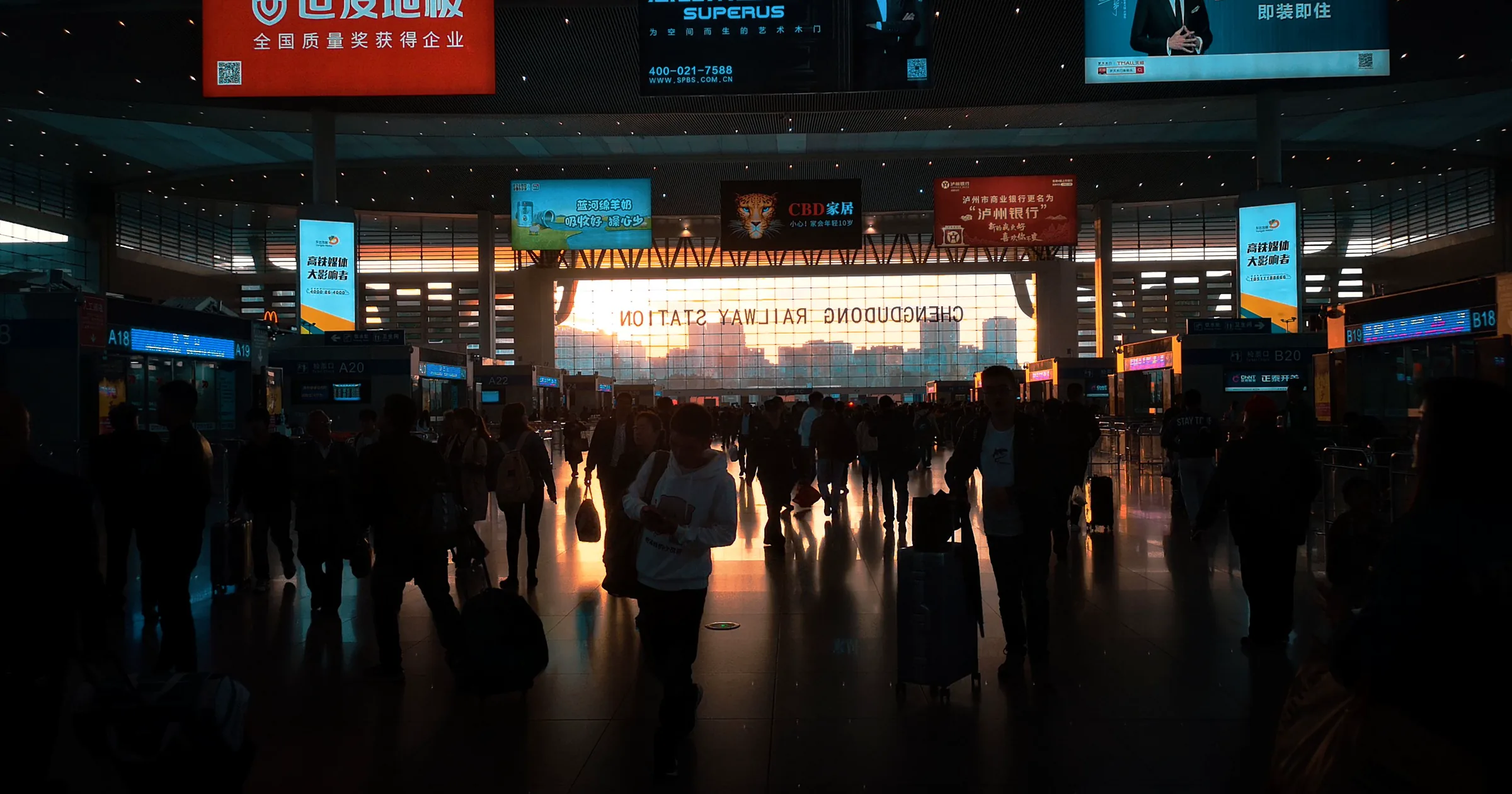
Planning a China trip independently is less “pick 12 famous names” and more “choose a pace you can actually walk.” High-speed rail makes long distances look easy on a map. Station time, hotel check-in, and first-day app setup do not.
This guide is the planning layer. For whether independent travel is even realistic, start with independent travel in China. For payments, data, and real-name bookings, keep the essentials hub open — those systems should be in motion before you polish café-level days.
If you already know your dates and want a local to turn a skeleton into a ready-to-follow PDF, use the itinerary planner or read what is included on the custom itinerary page.
Plan in this order (not the reverse)
A workable independent itinerary has four layers. Most first-timers start on layer four.
- Entry. Visa-free, transit, or a tourist visa — passport-specific. Use Do I Need a Visa for China? and the visa checker.
- Systems. Payments and internet decide whether day one is calm. Maps, DiDi, and QR menus sit on that stack.
- Skeleton. Overnight cities, rail hops, and one buffer night. This is the itinerary.
- Days. Neighborhoods, workshops, one landmark that actually fits. Optional once 1–3 are honest.
If you reverse the order, you get a beautiful spreadsheet that dies at the first failed Alipay QR.
How many cities for the days you have
Treat overnight bases, not “places you passed on a train,” as cities.
| Trip length | Overnight bases that usually work | What to cut |
|---|---|---|
| Up to 5 days | 1, maybe 2 | A third city almost never fits |
| 6–10 days | 2–3 (a rural corridor between them is a stretch, not another “greatest hits” city) | Five-city sprint loops |
| 10+ days | 3–4, or 2 plus a slower rural stretch | A new city every night |
A useful test: if two cities are more than about four hours of rail apart, they each need a real night — not a “quick look.” High-speed rail is the backbone, not a teleport.
Beijing → Xi’an → Chengdu in ten days is possible and still rushed. Beijing → Xi’an → Chengdu → Zhangjiajie → Shanghai in the same window is a tour product pretending to be independent travel.
Build the skeleton: rail, not a sightseeing list
Write the trip as nights, then hang trains on those nights.
- Pick a start city that matches your international flight (or accept one domestic hop).
- Pick an end city the same way. Do not “figure out the exit later.”
- Connect them with one rail spine. Side trips should return to the spine or replace a night on it — not stack new hubs.
- Put one buffer night near the end. Sold-out trains and weather are normal.
Example shape (not a promise, not a client trip): fly into Chongqing, overnight there, then a slower corridor, then one landscape stop, then back to the same airport city. That is how a sample southwest loop is sketched — labeled as a sample on purpose.
A first independent week often looks simpler than that: fly into Kunming, then fast trains to Dali and Lijiang. Independent Yunnan travel is the worked example — days, trains, and when not to bolt on Xishuangbanna. If Dali is the base and you want days outside the Old Town, Dali hidden gems covers Shaxi, Weishan, Xizhou, and the rest.
For trains and stations, use the transport hub. For night-one lodging that accepts a foreign passport, use hotels in China. Iconic sights that need passport reservations belong in attraction tickets — not in a walk-up fantasy.
What to leave unplanned
Independent travel in China feels better when some days are direction, not a timetable.
Leave loose:
- First afternoon after a long-haul flight
- One market / neighborhood day in each base city
- Weather-sensitive landscape days (have an indoor backup, not a second city)
Lock early:
- Overnight hotels that accept foreigners
- Peak-season attraction reservations
- Long-distance rail on Fridays and holiday weeks
You do not need a 6 a.m. museum slot on day one to prove the trip is “efficient.”
DIY sketch vs a local PDF
DIY is enough when your cities are already chosen, your dates are fixed, and you mainly need booking order. Follow the essentials hub, then this skeleton.
A custom PDF is worth it when:
- You mix cities with countryside or minority regions and do not want a staged “park”
- You have 8–14 days and keep adding cities because the map looks small
- Photography, food, or family pace matters more than covering famous names
- You want someone local to sanity-check trains and overnight placement
What we sell is planning, not a tour: a route you follow on your own, with a service fee and no hotel markup. Details and a labeled sample are on /custom-china-tour. The live service page is Tailor-Made Yunnan.
We do not publish invented traveler quotes. Traveler notes stay empty until someone finishes a paid itinerary and agrees in writing.
A one-page checklist before you buy tickets
- Entry path checked for your passport
- eSIM / SIM and a VPN backup decided
- Alipay or WeChat Pay path started (plus a cash backup)
- Overnight cities listed — count nights, not pins
- Rail hops drafted with a buffer
- Night-one hotel that takes a foreign passport
- Only the tickets that actually require advance reservation
When that list is honest, the itinerary is already most of the way there. The rest is taste: old streets vs museums, one landscape vs another, how early you want to get up.
Next step: sketch it in the China itinerary planner, or keep reading the itinerary planning hub for the supporting guides.