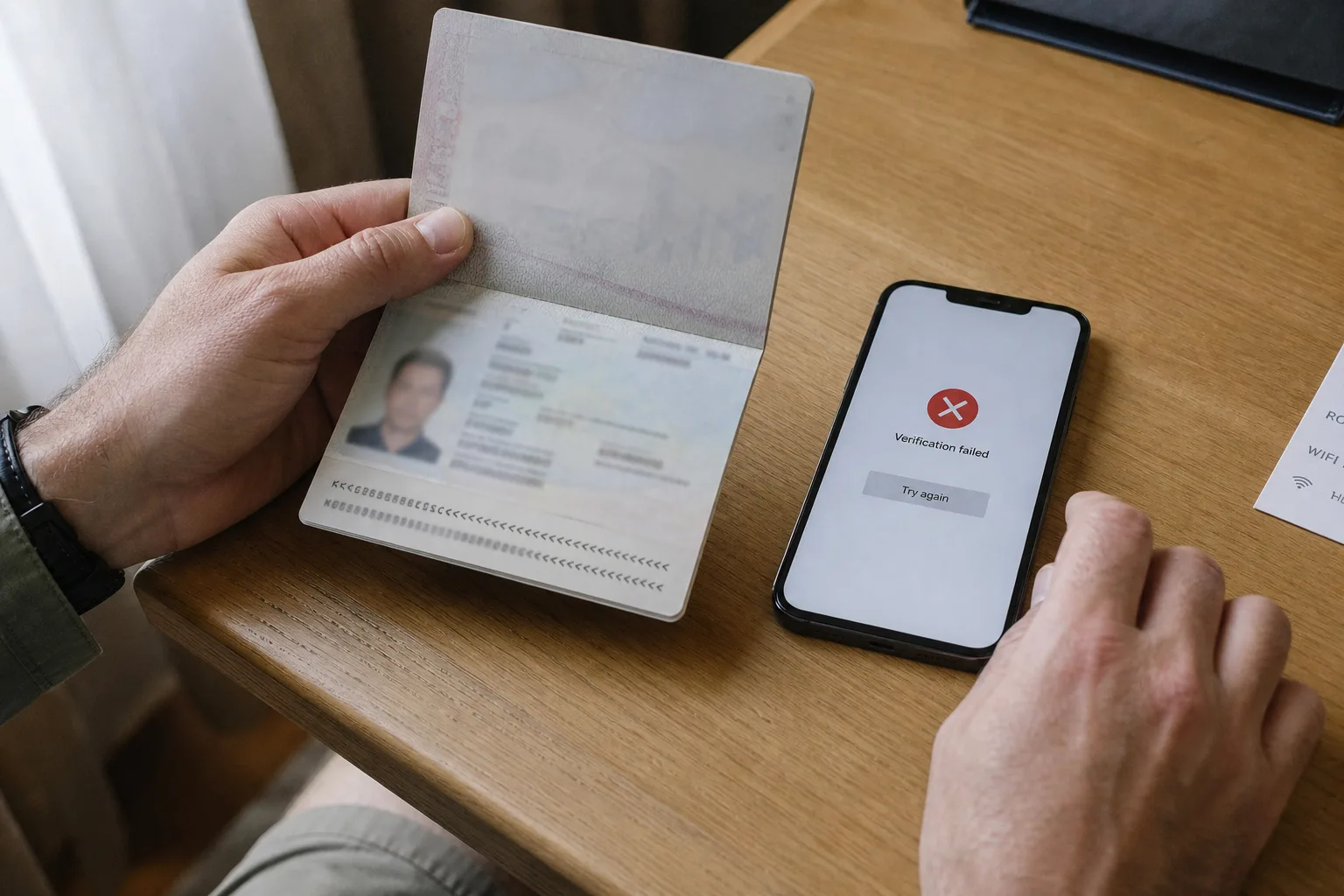

Last updated: August 2026 | Reading time: ~7 minutes
Can I Just Walk In?
You get to the entrance with your passport ready. There’s a line — but it isn’t a ticket line. Staff are scanning QR codes on phones. Someone ahead of you argues in English. The guard points at a sign you can’t fully read and shakes their head.
No same-day window. No “just buy one more.” You’re not getting in today.
On a first trip to China, that moment is more common than most guidebooks admit. In many countries you show up, buy a ticket, and walk in. At China’s popular attractions, museums, and shows, advance reservation is often the rule — sometimes days ahead, often with a fixed time slot, and usually with your passport details on the booking.
It’s not personal. Once you know why the system exists, planning gets simpler.
Wondering whether your must-see stops need advance booking? This guide is part of our Attraction Tickets in China hub, where we cover timed entry, passport-based reservations, and how foreigners actually get tickets.
Quick Answer
Many major sites use reservations to limit daily crowds, protect heritage buildings, and spread arrivals across time slots. “I’ll buy at the gate” is a risky default for famous or capacity-limited places — quieter spots may still be flexible.
A few minutes of checking before you go can save a wasted half-day.
When you’re ready to book, use the practical walkthrough: How to Book Attraction Tickets in China as a Foreigner.
Why Does China Do This?
It’s mainly about volume. Big museums and palace complexes can draw more people in one afternoon than the site can safely hold. Uncontrolled entry wears down old buildings, blocks exits, and turns the visit into a shuffle.
Reservations help sites:
- Cap how many people enter each day or each slot
- Protect halls, temples, and historic streets from overload
- Keep the visit walkable instead of shoulder-to-shoulder from the gate
Crowd management tightened during the COVID years and, at many top sites, timed entry never fully went away. You’ll still see boards for real-name reservation (实名预约), time-slot visiting, and sometimes “no same-day booking.” Rules differ by place and change — always verify before you go.

Where Should You Book Ahead?
You don’t need a reservation for every noodle shop. You need a habit of checking anything famous, capacity-limited, or date-sensitive.
Usually worth booking ahead:
- Famous landmarks — e.g. the Forbidden City (Palace Museum) in Beijing
- Major museums — e.g. the National Museum of China or Shanghai Museum on busy days
- Temples and scenic areas with daily caps — e.g. Hangzhou’s Lingyin / Feilaifeng area (often real-name + advance booking; some periods don’t allow same-day slots)
- Seasonal sights, special exhibitions, and popular evening shows

Everyday places that usually don’t need a ticket reservation:
- Neighborhood restaurants and tea shops
- Ordinary city walks and most parks without timed entry
- Small local markets
Sell-outs are most common on:
- Weekends
- Public holidays (Golden Week, Chinese New Year travel weeks, May Day)
- That city’s peak season
Many major attractions only open the booking window about 7–14 days ahead. Miss that window on a fixed itinerary and the calendar can look like a wall of “sold out” — that’s normal, not a glitch. On the Palace Museum booking screen below, today is closed, tomorrow is fully booked, and later dates fill the same way.
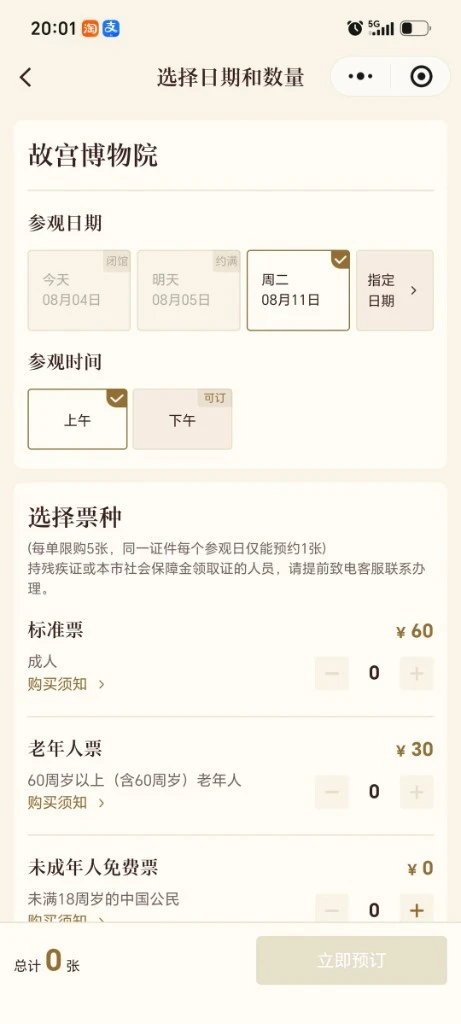
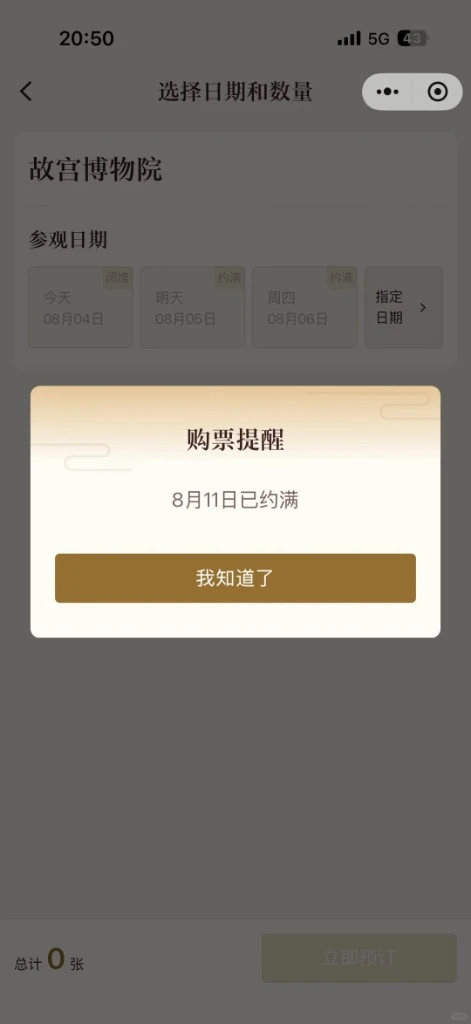
Try a date that looked open a moment earlier and you may still get a “fully booked” (约满) notice — inventory moves fast once the window is live.
Why Do They Need My Passport?
Many major attractions use real-name tickets. Your reservation may be linked to:
- Your passport number
- Your name (exactly as on the passport)
- Your visiting date and time slot
This isn’t a special foreigner rule — Chinese visitors book against a national ID the same way. At the gate, your passport is often the ticket: staff match the document to the booking.
A typo in the name can mean entry refusal even if you paid. For how real-name rules trip up foreigners more broadly, see China’s real-name system for foreigners.
How Can Foreigners Prepare?
Before a must-see stop, run this short checklist:
- Search the attraction — English name + “reservation” / “tickets,” or ask your hotel with the Chinese name
- Check if a reservation is needed — free-entry areas can still require timed booking
- Book inside the window — for icons, watch the 7–14 day open period; for weekends and holidays, be ready the day slots appear (or earlier if the site allows)
- Save confirmation offline — screenshot QR codes and order IDs; gate signal is often weak
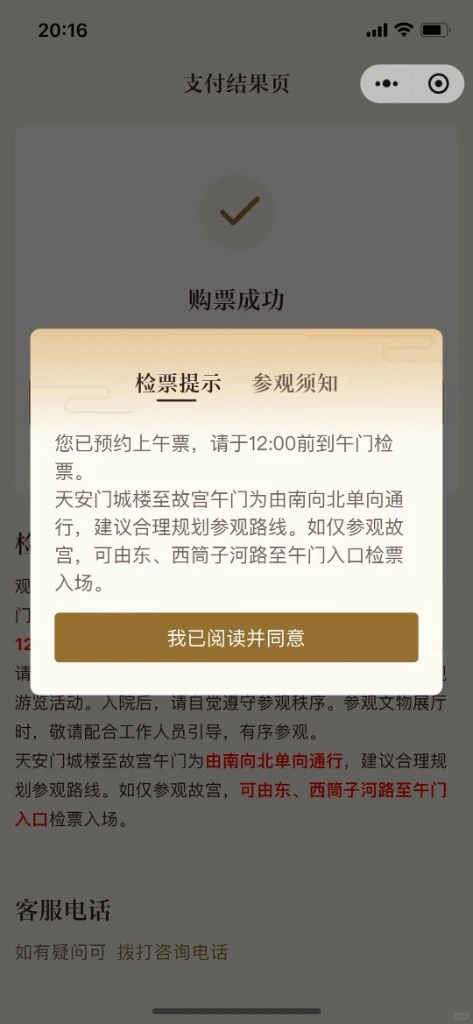
After you pay, read the check-in notes carefully. Palace Museum morning tickets, for example, often require you to enter via the Meridian Gate (午门) before a set time — the booking app will spell this out.
If you’re unsure the night before: ask the hotel or a local host, “Can we walk in tomorrow?” That question beats finding out at the turnstile.
English-friendly platforms help when they list your sight — Trip.com is a common starting point — but the principle is the same on any channel: confirm the slot, match the passport, keep proof offline.
For step-by-step paths (Trip.com, hotel help, WeChat backups), read How to Book Attraction Tickets in China as a Foreigner.
What Doesn’t Need a Plan
Reservations matter for capacity-limited icons. They’re not the whole trip.
A lot of what people remember from China is unplanned: a tea shop with three tables, a neighborhood dinner, a walk where you follow the smell of street food. Book the places that sell out. Leave air for everything else.

What To Do Next
- List must-see stops and mark which ones need advance booking.
- Book fixed-date icons as soon as their window opens — then leave room for walks and local meals.
- If you want help matching cities, days, and ticket timing, Plan my China trip.
- For payments, internet, and other pre-trip basics, Get Free Survival Kit.
Frequently Asked Questions
Can I buy attraction tickets at the gate in China?
Sometimes at smaller or quieter places. For popular landmarks and museums, treat gate purchase as backup, not the plan — many are reservation-only on busy days.
Do all attractions in China require reservations?
No. The pattern is strongest at famous, capacity-limited, or exhibition-style sites. Everyday restaurants and neighborhood walks usually don’t need a ticket booking. Always check the specific place.
Why is my passport required for a museum ticket?
Because many tickets are real-name: the booking is tied to your ID, name, and time slot so staff can verify entry and control daily numbers. For how to actually book as a foreigner — including common passport and platform issues — see How to Book Attraction Tickets in China as a Foreigner.
Related Guides
- Attraction Tickets in China
- How to Book Attraction Tickets in China as a Foreigner
- China Real-Name System for Foreigners
- Payments in China for Foreigners
- Internet, VPN and SIM in China
- Travel China Essentials
Last updated: August 2026. Reservation rules, timed-entry windows, and passport requirements vary by attraction and can change — always confirm with the official channel or your hotel before you go.