For most visitors: buy a China Unicom prepaid SIM at the airport or an official city store, bring your original passport, and expect a face scan as part of the process.
But before you do anything, you need to make one decision — physical SIM or eSIM — because they solve different problems. That’s what this guide is about.
Questions like these show up constantly in China travel forums:
“I dropped by a local phone shop and they said they couldn’t sell me a SIM card because I’m a foreigner.”
“I’ve been reading conflicting advice — is there even a prepaid option, or do I have to sign a monthly contract and cancel before I leave?”
“Watched some vlogs and everyone says eSIM is fine — but then I read you need a local number for the apps. Which is it?”
All three are legitimate concerns, and the conflicting advice out there doesn’t help. The short answer: yes, foreigners can get a SIM card in China, but the process is different from most countries, and picking the wrong option for your trip will cause real headaches.
Preparing your internet setup before arriving in China? This guide is part of our Internet, VPN and SIM in China hub, where we explain local SIM cards, eSIM options, roaming, VPN preparation, blocked apps, phone number issues, and what foreign travelers should set up before departure.
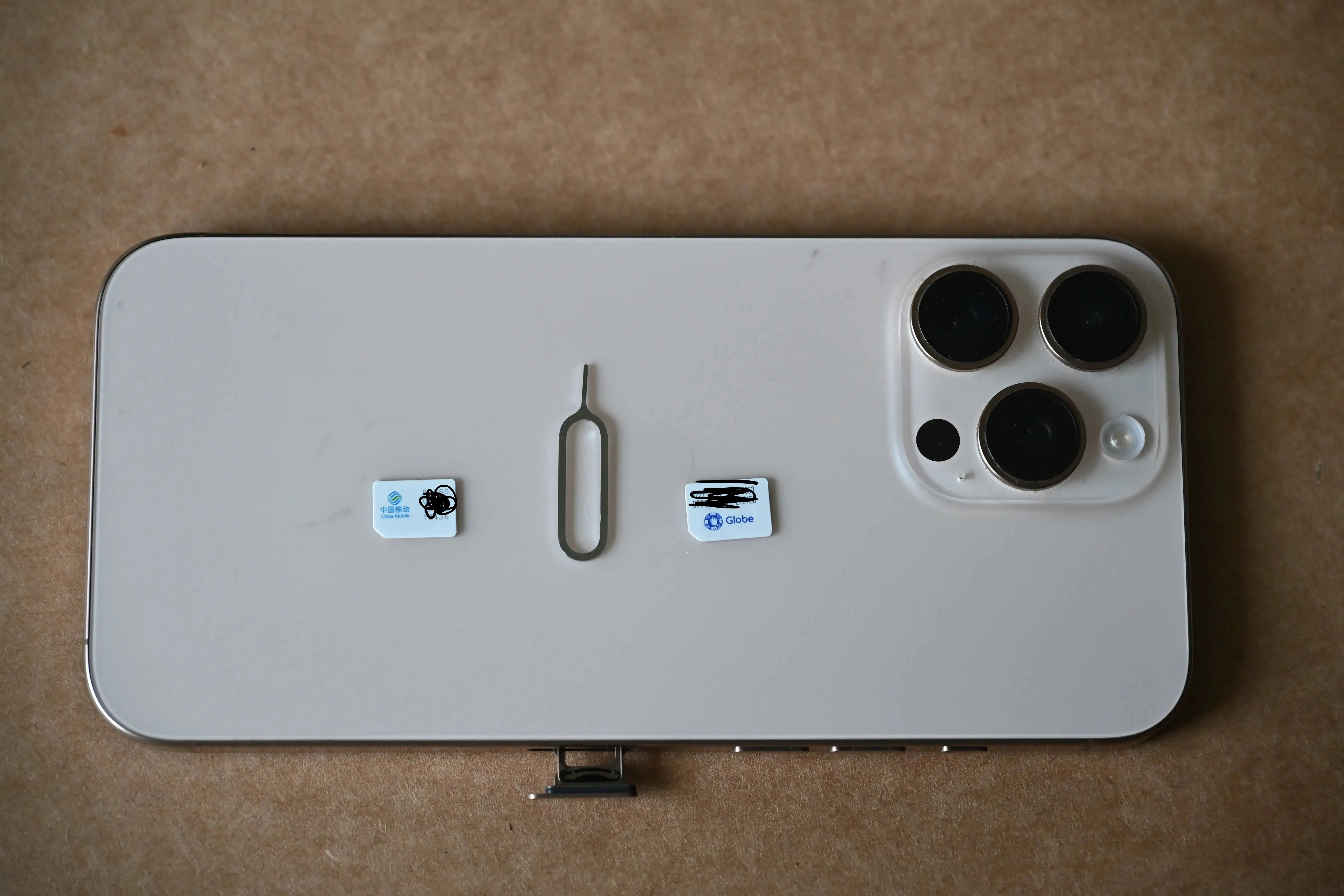
Curious how China’s internet setup actually differs from what you’re used to back home? I break it down here, based on constantly switching between a Philippines SIM and a China SIM myself.
Physical SIM vs. eSIM: Which One Is Actually Right for You
This is where most guides either oversimplify or contradict each other, so let’s be direct.
Both give you data in China. The difference is that a physical SIM from a Chinese carrier gives you a local Chinese phone number , and an international eSIM doesn’t. That distinction matters more than most people realise.
| Physical SIM (China Unicom / Mobile) | International eSIM (Airalo / Holafly / Nomad) | |
|---|---|---|
| Where to buy | Airport counter or city store | Online, before you arrive |
| Passport & face scan required | Yes | Usually no |
| Gets a Chinese phone number | ✅ Yes | ❌ No |
| Can receive SMS verification codes | ✅ Yes | ❌ No |
| Bypasses Great Firewall | ❌ No — need a VPN | ✅ Yes — routes outside China |
| Setup effort | 20–30 min in store | Scan a QR code |
| Cost | ¥50–100/month | $5–30 for 1–15GB |
| Best for | Stays 2+ weeks, WeChat Pay setup (especially for new users from scratch), local app registration | Short visits, data browsing only |
The key tradeoff: international eSIMs bypass the Great Firewall without a VPN, which is genuinely useful. But they don’t give you a Chinese number, which means you can’t register WeChat with a local number, can’t use Meituan (food delivery, power banks), and may hit walls with certain booking platforms. For most short-term tourists in 2025–2026, this matters less than it used to — WeChat Pay and Alipay now accept foreign cards, and Didi works without a local number. But if you’re setting up any accounts from scratch, a local number is still the smoother path.
In practice, here’s how most people decide:
- Under 2 weeks, mainly maps and browsing → Buy a travel eSIM before you fly so data works at the airport. Compare exact eSIM plans, or read the Trip.com China eSIM review if that is the provider you are considering. No queues, no face scan.
- 2+ weeks, or you want WeChat Pay / local app SMS → Physical SIM. Takes 30 minutes at a store but you’ll be glad you did it.
- Heading to western China (Tibet, Xinjiang, rural Sichuan) → Physical SIM from China Telecom specifically, which has the strongest coverage out west.
- Landing tonight with no eSIM → Official carrier store or airport counter (below). Do not wait for a mall kiosk.
Can foreigners buy SIM cards in China?
Yes — foreigners can legally buy SIM cards in China using a passport. However, you must complete real-name registration and facial verification at an official carrier store. I’ll walk you through exactly how to choose, buy, and set up your SIM — step by step.
Which Carrier? Unicom, Mobile, or Telecom
Three options, and the choice is simpler than it looks.
China Unicom is the standard pick for foreigners with their own phones. It uses GSM/WCDMA/LTE bands that are compatible with most phones purchased outside China, plans are competitively priced, and larger branches are more accustomed to handling foreign passports. For ¥69 you get 10GB of data and 500 minutes of domestic calls valid for 30 days — their 全国流量王 (Nationwide Data King) plan is a solid default.
China Mobile has the best raw coverage — strongest in rural areas and the largest 4G/5G footprint(urban 5G now minimizes 2G fallback for most international phones). The catch is that its legacy 3G infrastructure uses a non-standard band that most international phones don’t support. In 4G/5G coverage areas this doesn’t matter, but in smaller towns your phone can drop to painfully slow 2G. For city-focused travel, it’s a reasonable choice; for anything off the beaten path, be aware of the band issue.
China Telecom has better penetration in western China than either of the other two. If your itinerary includes Tibet, Xinjiang, or remote Sichuan, this is genuinely the better option. For urban travel, there’s no meaningful advantage over Unicom.
One-sentence rule: Staying in cities → China Unicom. Heading west → China Telecom.

Why China SIM Cards Work Differently
If you’ve bought a prepaid SIM in Southeast Asia or Europe, you’re used to just handing over cash and walking out. China doesn’t work like that.
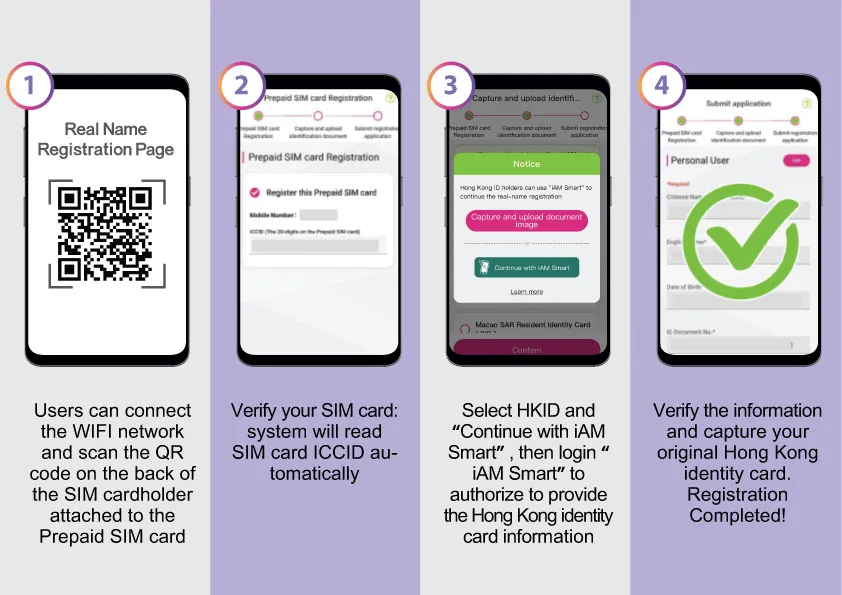
Since December 2019, every SIM card sold in China must be registered to a verified identity, and that verification includes biometric facial recognition — your live face checked against your passport photo in real time. This applies to everyone, including foreign visitors. The practical consequence: you can’t buy a SIM over the counter at a corner shop. You need to go to an official carrier store or airport counter, and you need to bring your original passport.
There’s also a second thing worth understanding: in China’s app ecosystem, your phone number functions as proof of identity. When WeChat or Alipay asks you to verify with a Chinese number, they’re not just confirming your contact details — they’re using that registered SIM as a form of ID. A foreign number often fails this check, which is why your home SIM won’t unlock local services even if your phone has signal.
The Complete Process: Buying Your SIM in China
Before You Leave Home
Unlock your phone. If you bought your phone on a carrier contract (common in the US, UK, and Australia), it may be locked to that network. Test it with someone else’s SIM before you travel. If it’s locked, call your carrier and ask them to unlock it — most will do it free, especially once your contract has ended.
Check your phone’s band compatibility. Most iPhones from XR onwards and flagship Android phones are broadly compatible with Chinese networks. Midrange or older devices may miss key bands. You can check at GSMArena or frequencycheck.com — search your exact model against China Unicom or China Mobile.
Install a VPN before you arrive if you’ll use hotel Wi-Fi or a local Chinese SIM. That’s when Google, WhatsApp, Instagram, and Gmail usually fail. A travel eSIM on mobile data is often enough without one. VPN apps are blocked on the Chinese App Store and Google Play, so if you need one, install it before you cross the border. I use NordVPN. ExpressVPN is simpler; I have not used it as my daily China VPN. Pick in Best VPN for China.
Decide where to buy your SIM:
- Airport counter — convenient, English-speaking staff, fast process (many now offer QR code + passport OCR self-service). Plans run 20–30% more than city stores and selection is limited. Fine if you want zero friction on arrival.
- Official carrier store in the city — better value, more plan options, more reliable for edge cases. Go to a directly-operated 营业厅 (service hall), not a small franchise outlet. Smaller shops often can’t or won’t process foreign passports.
- Pre-order online — some services will deliver a SIM to your hotel or allow remote activation using a passport photo upload. Useful if you want everything sorted before you land.
At the Store: What Actually Happens
Walk in and say: “我要办手机卡” (Wǒ yào bàn shǒujī kǎ) — “I’d like to buy a SIM card.”
Here’s the sequence:
- They’ll ask for your passport. Original only — photocopies aren’t accepted. They’ll scan the photo page.
- Face scan. You’ll sit in front of a camera or hold your phone up to one. The system compares your live face to your passport photo. Usually takes 10–30 seconds.
- Plan selection. Staff will show you options on a screen or laminated card. For tourists, look for short-term prepaid options in the ¥50–100 range covering 10GB+ for 30 days.
- Payment. Cash (RMB), WeChat Pay, or Alipay. Credit cards are rarely accepted.
- Activation. Takes a few minutes. Don’t leave before confirming it works — see the checklist below.
One thing to know before you go: smaller stores may turn you away. This isn’t universal, but franchise outlets or shops in less-touristy areas sometimes tell foreigners they can’t process foreign passports. They usually can — they just haven’t done it before. Going to a flagship or directly-operated store (the ones with the full carrier branding and no other business mixed in) is the reliable path.
Before You Walk Out: The Checklist
Don’t leave the store without confirming all of this:
- SIM is inserted, phone shows signal
- Mobile data is on in your settings
- You can load a webpage (try baidu.com — avoids GFW issues)
- You can send and receive a test SMS
- You have your Chinese number written down or photographed
- You know how to top up (ask staff to show you the carrier’s app or WeChat mini-program)
The SMS test is the one people skip and then regret. Sixty seconds at the counter saves a lot of frustration later.
FAQ
Can foreigners buy a SIM card in China with a passport? Yes. You must complete real-name registration and facial verification at an official carrier store or airport counter. Bring your original passport.
Should I get a physical China SIM or a travel eSIM? Need a +86 number for app SMS or new local accounts? Get a physical SIM. Only need data and international apps? A travel eSIM is usually easier.
Which carrier is best for foreigners? China Unicom is the usual first pick for foreign phones and tourist prepaid plans. Go to a flagship or directly operated store, not a small franchise. Ask for 预付费 (yùfùfèi) prepaid — not a postpaid contract — and confirm hotspot (热点) if you need tethering.
| Trip Length | What to Look For | Approx. Cost |
|---|---|---|
| 1–7 days | 3–5GB data, no calls | ¥30–50 |
| 1–4 weeks | 10–20GB data + calls | ¥50–80 |
| 1–3 months | Unlimited (throttled after 20–30GB) | ¥80–150/month |
What if face verification fails at the store? Remove glasses, improve lighting, retry. Ask for supervisor help or try another official branch. Online/pre-order SIMs that verify with uploaded photos can be a workaround. The system compares your live face to the passport photo — glasses, bad lighting, or an old passport photo are the usual failure triggers.
Do I need a Chinese number for Alipay and food delivery? Not always — foreign cards work in many Alipay/WeChat flows now. A local number still helps with SMS codes, Meituan signup, and some registrations.
After you buy: SMS, data, and leaving China
Not receiving SMS codes: International SMS may be disabled (ask the store to enable it), numbers starting with 170/171 are often blocked by apps (prefer 130–189), or the network is slow — wait, restart, retry. Have the store send a test SMS before you leave.
Signal but no internet: Toggle mobile data on; set APN (Unicom 3gnet, Mobile cmnet, Telecom ctnet); if Baidu loads but Google doesn’t, turn on your VPN; stuck on 2G may mean band incompatibility.
Do you need to cancel before leaving? No. Prepaid SIMs expire when the plan ends. Before you leave, link a backup email to WeChat/Alipay tied to that number so you can recover accounts after the number is reassigned.
Can You Just Use International Roaming?
Technically yes. Practically, almost no one should.
Roaming costs from most home carriers are significantly higher than a local SIM — often $10–20 per day for data. More importantly, international roaming on most carriers still routes traffic through Chinese networks, which means the Great Firewall applies anyway. You’d be paying more and still can’t access Google.
The one exception worth knowing: some airport counters sell Hong Kong-based roaming SIMs that technically give you a non-mainland connection, which means they bypass the Great Firewall without a VPN. They’re more expensive than a standard mainland SIM, but the all-in-one convenience (data + no Firewall) makes them a reasonable option for short trips if you want zero configuration on arrival.
Useful Phrases for the Store
Print this or screenshot it. Show it directly to the staff if needed.
| Chinese | Pinyin | English |
|---|---|---|
| 我要办手机卡。 | Wǒ yào bàn shǒujī kǎ. | I’d like to buy a SIM card. |
| 需要护照吗? | Xūyào hùzhào ma? | Do you need my passport? |
| 可以帮我激活吗? | Kěyǐ bāng wǒ jīhuó ma? | Can you activate it for me? |
| 人脸识别失败了。 | Rén liǎn shíbié shībài le. | The face verification failed. |
| 我收不到验证码。 | Wǒ shōu bù dào yànzhèng mǎ. | I’m not receiving the SMS code. |
| 可以帮我测试一下吗? | Kěyǐ bāng wǒ cèshì yīxià ma? | Can we test it first? |
| 我要预付费套餐。 | Wǒ yào yùfùfèi tàocān. | I want a prepaid plan. |
| 包含热点功能吗? | Bāohán rèdiǎn gōngnéng ma? | Does it include hotspot? |
| 我的手机号码是多少? | Wǒ de shǒujī hàomǎ shì duōshǎo? | What is my phone number? |
Bottom Line
Getting a SIM card in China involves more steps than most countries, but once you know what to expect, it’s straightforward. The things that catch people off guard: needing the original passport (not a copy), the face scan, and the occasional store that says it can’t help — when a different branch a few blocks away can.
If you’re undecided between a physical SIM and an eSIM, use this as a final tiebreaker: do you need to register any Chinese apps from scratch on this trip? If yes, get a physical SIM with a local number. If you already have accounts set up and just need data and internet access, an international eSIM is genuinely the easier option.
Related Guides
Planning your China trip? These practical guides may also help with internet access, payments, navigation, and daily travel setup:
- Internet, VPN and SIM in China
- Best eSIM for China Travel
- Best VPN for China
- China Real-Name System Explained
- Order Food Without a Chinese Number
- Payments in China for Foreigners
Last updated: August 2026. Carrier plans and pricing change frequently — confirm details with the carrier at time of purchase.